Landlord vs Tenant Responsibilities: Ontario Landlord Tenant Act Maintenance Rules
Maintenance is where most rental properties win or lose profit. Not because repairs are avoidable, but because unclear responsibilities, slow responses, and weak documentation turn small issues into expensive ones.
For Windsor owners, the goal is simple: protect the property, keep tenants satisfied, and reduce the risk of disputes. This guide explains how Ontario landlord tenant act maintenance rules typically divide responsibility between landlords and tenants, what gray areas to watch for, and how a professional system keeps everything on track.
Why Maintenance Responsibilities Matter to Windsor Owners
When responsibilities are unclear, three things happen fast:
Repairs get delayed
Tenants get frustrated
Owners get stuck paying more than they should
A reliable property management workflow prevents that. It sets expectations at move-in, documents the condition of the unit, routes maintenance requests properly, and keeps a clean record of what was reported, when it was handled, and how it was resolved.
Ontario Landlord Tenant Act Maintenance Rules Owners Should Know
Under Ontario’s rental framework, landlords generally have the core obligation to maintain the rental unit in a good state of repair and comply with health, safety, and housing standards. Tenants, on the other hand, are typically responsible for keeping the unit reasonably clean and for damage caused by willful or negligent actions.
The practical takeaway for owners is this: habit and documentation matter. If you manage maintenance with a consistent system, you reduce disputes and protect your position when issues escalate.
Landlord Responsibilities That Owners Should Expect to Cover
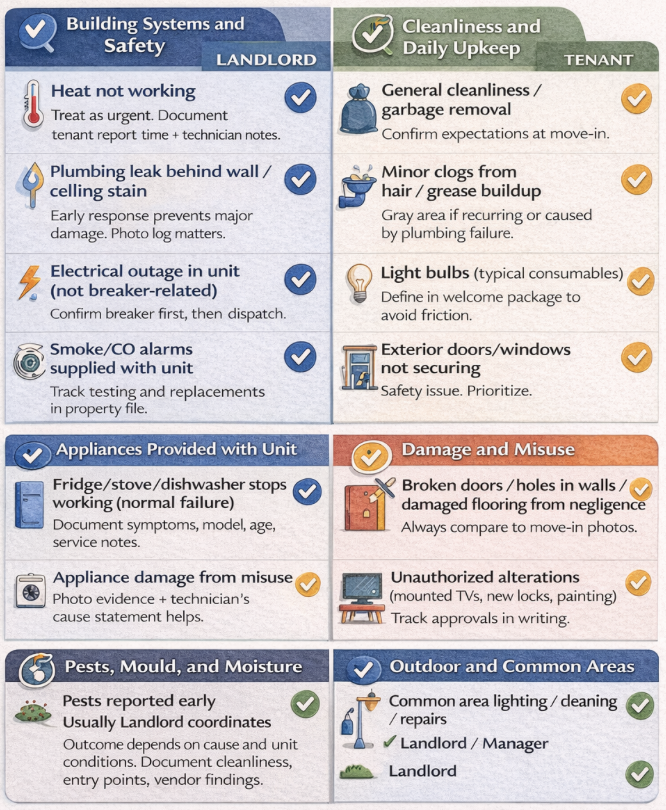
In most rentals, these are commonly treated as landlord responsibilities:
Building systems and major components (heating, plumbing, electrical)
Water leaks and moisture issues that threaten damage or mould
Roof, windows, doors, and exterior integrity
Appliances provided by the landlord
Pest control when it is not caused by tenant negligence
Safety requirements (smoke alarms, carbon monoxide alarms, secure locks where applicable)
Owners should also expect to cover repairs that fall under normal wear and tear. That includes items that fail over time even when a tenant is careful.
Tenant Responsibilities That Should Be Clearly Communicated
Tenants are often responsible for:
Keeping the unit reasonably clean
Reporting problems quickly before they worsen
Replacing consumables they use (light bulbs, some batteries, minor wear items depending on your lease terms)
Paying for damage caused by misuse, negligence, or unauthorized alterations
The key point is not to “win” the responsibility argument. It’s to prevent confusion through strong move-in documentation and clear reporting instructions.
Ontario Landlord Tenant Act Maintenance Rules and the Gray Areas Owners Should Watch
Most conflicts happen in gray areas, like:
Clogged drains
Pest complaints
Appliance misuse vs normal failure
Humidity-related issues
“It was already like that” damage claims
This is where your documentation system becomes your leverage. If you have move-in photos, inspection notes, written tenant communication, and maintenance records, these gray areas become straightforward.
Documentation That Protects Owners When Maintenance Disputes Happen
If you want fewer disputes, focus on record-keeping:
Move-in condition report and photos
Inspection notes (routine and follow-up)
Work orders and vendor invoices
Written tenant communication (requests, scheduling, updates)
Proof of entry notice when required
This is the difference between “we said, they said” and “here’s the timeline.”
How Richmond Property Management Helps Owners Stay Protected
Most owners are not trying to avoid repairs. They’re trying to avoid chaos.
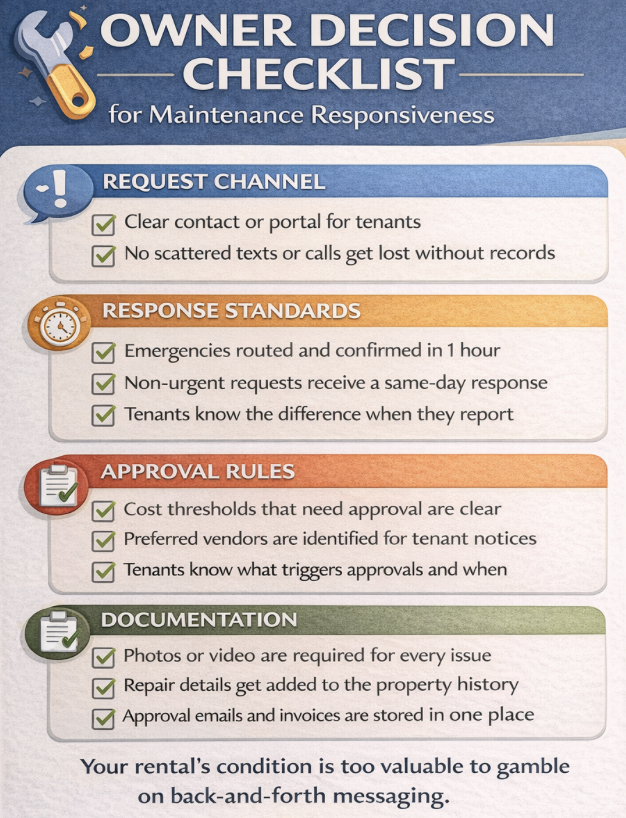
Richmond Property Management is built for owners who want maintenance handled with structure: clear request channels, documented work orders, consistent follow-through, and reporting that lets you understand what happened without chasing details. That reduces vacancy risk, protects property condition, and keeps tenants supported professionally.
If you want your maintenance handled with less stress and better control, Richmond PM is the hassle-free alternative to DIY ownership.
Additional Resources: