Landlord Right of Entry in Ontario: Notice, Inspections, and Repairs Explained
Owning a rental property is a business, and access to your unit is part of operating that business. But in Ontario, access is also one of the most common places landlords get into trouble—usually not because they’re trying to do anything wrong, but because the process feels “obvious” when it’s actually procedural.
If you’ve ever searched Ontario landlord tenant act entry rules, you already know the basics: most entries require proper notice, specific information, and a legally permitted time window. Where owners get burned is in the details—vague notices, incorrect delivery, showing up early, assuming a maintenance request equals permission, or sending trades without a clear entry plan.
This guide explains how to enter legally and professionally so you can protect your property, keep repairs moving, and avoid the kind of conflict that leads to delays, complaints, or formal disputes.
What Ontario Law Requires Before You Enter a Rental Unit
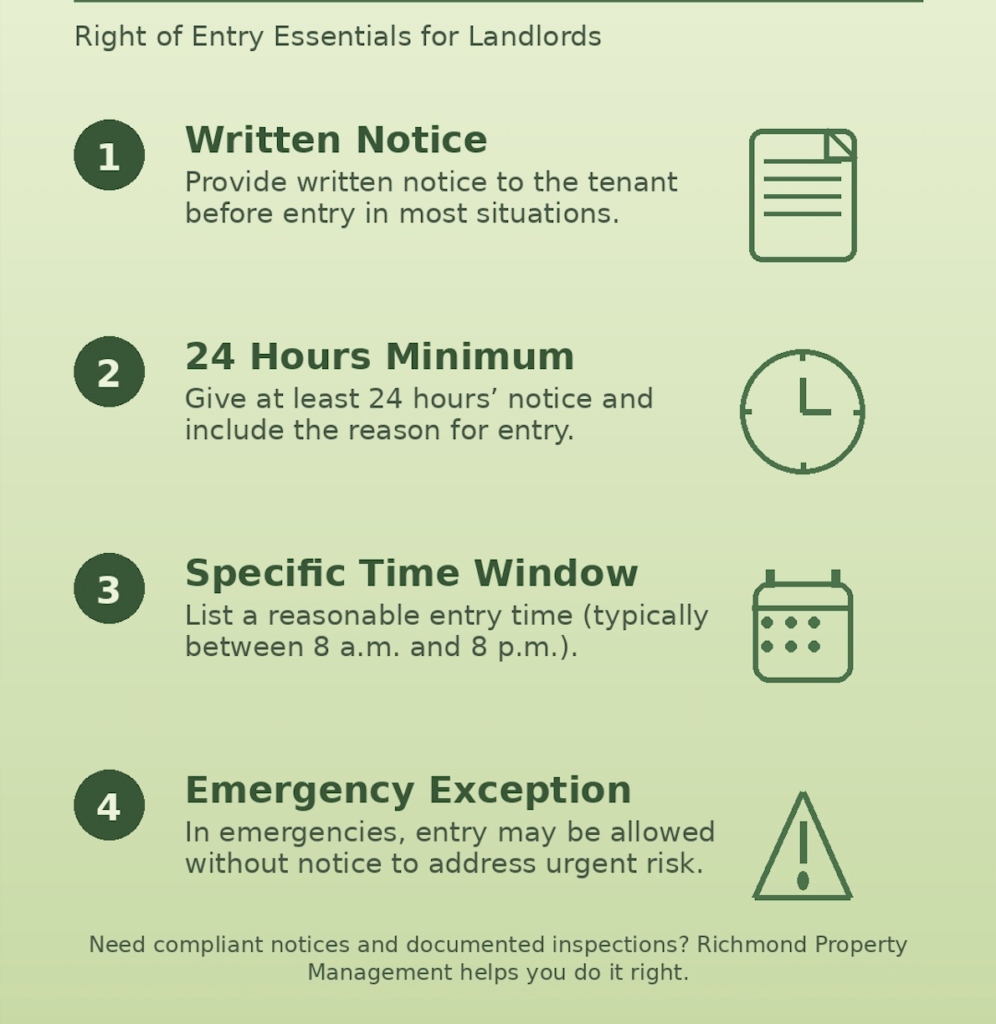
In most non-emergency situations, legal entry starts with proper notice. “Proper notice” isn’t just a heads-up text. It’s written notice delivered correctly, with the right information, and enough lead time.
Owners should treat entry notice like any other operational document: consistent, repeatable, and easy to prove later. When your notice is clean, access becomes routine. When it’s inconsistent, access becomes emotional—and that’s when things stall.
A compliant notice typically needs to clearly state:
Why you’re entering (the reason must be specific)
When you’re entering (the date)
What time window you’ll enter within (during the legal hours)
Even if your intent is maintenance, the quality of your process matters. A tenant can cooperate fully and still be right to question an entry if the notice is missing key details.
LandLord Right of Entry: When Can You Enter Without Notice
There are limited situations where notice is not required. These are the exceptions, not the norm, and owners should be careful not to stretch them.
You can generally enter without written notice when:
There’s an emergency (a situation requiring immediate attention to prevent damage or danger)
The tenant provides consent at the time of entry
You are in a scenario where the law allows entry under strict conditions and you have complied with those conditions
A common mistake is assuming “the tenant asked for repairs” automatically equals permission to enter whenever the vendor is available. A maintenance request helps justify why you need entry, but it doesn’t replace a proper schedule or consent at the door.
The 24-Hour Notice Checklist Owners Should Follow Every Time
If you want an entry system that never feels stressful, use a checklist that you follow for every non-urgent entry. This is the kind of consistency that prevents disputes before they start.
Use this checklist for routine inspections, maintenance, and repairs:
Written notice is created and saved (keep a copy)
Notice is delivered properly
The entry is scheduled with enough lead time (most owners follow the 24-hour standard people reference when looking up Ontario landlord tenant act entry rules)
The reason is clear and specific (avoid vague phrases like “inspection” without context)
The date is explicit
The time window is within the permitted hours
Vendor details are coordinated so the tenant isn’t dealing with uncertainty
Operationally, your goal is simple: the tenant should know exactly what’s happening and when, and you should have documentation that proves it.
How to Schedule Inspections Without Creating Tenant Conflict
Inspections are allowed, but the way you do them matters. Owners get better results when inspections are framed as property care, not surveillance.
A professional inspection process looks like this:
Notice is sent with a clear reason (seasonal safety check, smoke/CO, visible maintenance)
The inspection list focuses on building systems (plumbing leaks, ventilation, appliances, safety devices)
Photos are limited to property components, not personal belongings
Any issues found are summarized with a clear next step and timeline
If your inspection process is respectful and consistent, tenants are more likely to cooperate, and you’ll catch small issues before they become expensive repairs.
Repairs and Vendor Access: A Simple Process That Prevents Delays
Repairs are where entry problems cost owners real money. Missed access means re-booking trades, extended downtime, and longer timelines on unit readiness.
To keep maintenance moving, use a simple process:
Confirm the scope of work and the estimated time window with the vendor
Send the notice early with a specific reason and clear timing
Send a reminder before the visit (short, professional, consistent)
Document the outcome (completed, rescheduled, access not provided, parts needed)
If access fails, don’t rely on memory. Log it immediately and keep the vendor note. Clean documentation is what separates “we tried” from “we can prove it.”
Common Entry Mistakes That Lead to Complaints and LTB Issues
Most disputes happen because the process wasn’t tight. Here are the patterns that cause problems:
Notice doesn’t include a specific reason
Time window is unclear or outside legal hours
Entry is attempted before the notice period has elapsed
Owners rely on texts or casual messages without a formal notice backup
Trades arrive without a clear schedule and the tenant feels pressured
Owners treat tenant frustration as “non-cooperation” instead of fixing the workflow
If you manage entry like a system instead of a one-off event, these issues drop dramatically.
A Practical Entry System for Owners Who Want Fewer Headaches
If you want a low-stress way to stay compliant and keep work moving, build a repeatable entry workflow:
A notice template you reuse every time
A shared maintenance calendar
Vendor scheduling standards (clear arrival windows)
A simple documentation habit (saved notice + outcome notes)
This is the difference between “chasing access” and running a rental like a business.
How Richmond Property Management Handles Entry, Notices, and Maintenance
If you own rental property in Windsor and want to protect your time, Richmond Property Management can handle the operational side of legal entry: consistent notices, inspection scheduling, vendor coordination, tenant communication, and documentation that keeps everything professional and defensible.
If you want a hands-off way to keep your property maintained without second-guessing compliance, contact Richmond Property Management through richmondpm.ca.