Rental Property Tax Deductions: Tax Season Tips for Owners Using Property Management
Disclaimer: This article shares general suggestions to help property owners understand rental property tax deductions and prepare for tax season. It is not tax, legal, or accounting advice. Every situation is different, so please speak with a qualified accountant or tax professional for guidance specific to your income, expenses, and rental property.
How Tax Season Changes When You Use Property Management
Tax season is where a well-run rental turns into a well-documented rental. For most owners, the biggest opportunities around rental property tax deductions come down to two things: clean records and consistent categorization. That’s exactly where property management can make a difference.
When your rental is professionally managed, your income and expense activity is usually tracked in one system. Instead of reconstructing a year’s worth of transactions from emails and bank statements, you’re working from clear owner reporting that supports your accountant’s process. That doesn’t replace professional tax advice, but it can reduce stress, reduce mistakes, and help you maximize legitimate rental property tax deductions with better documentation.
What Documents Owners Should Gather First
If you want your accountant to move fast and file accurately, start by gathering the paperwork that typically supports rental property tax deductions. Whether you self-manage or work with Richmond Property Management, the goal is the same: make your income and expenses easy to verify.
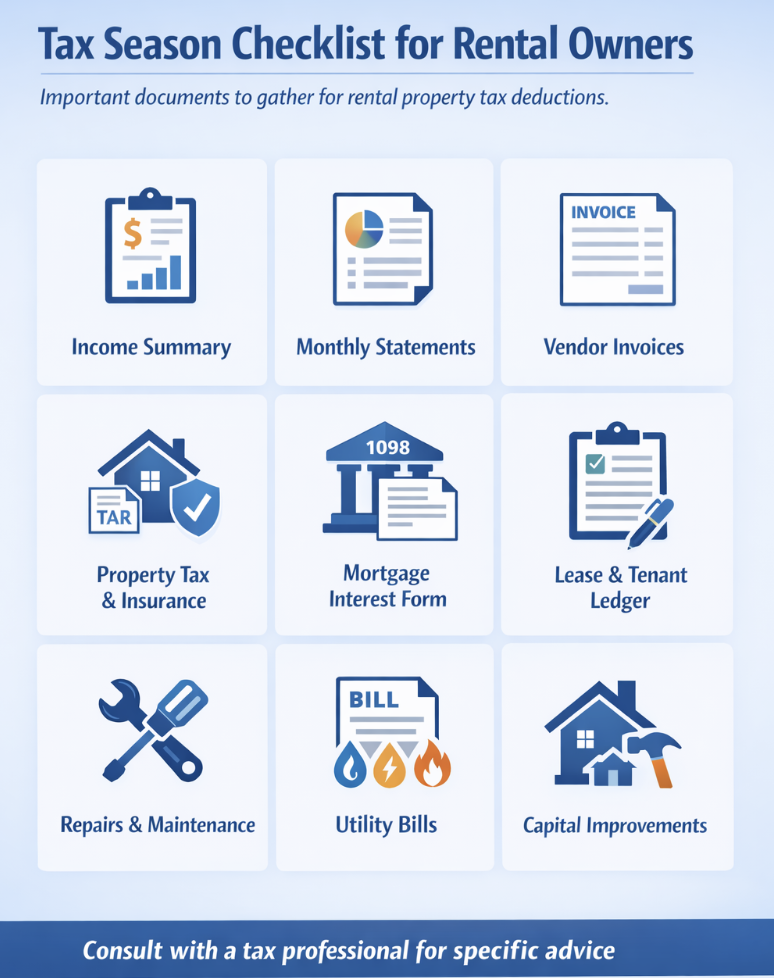
Here’s a practical checklist to pull together before you start:
Annual income summary (rent collected, credits, reimbursements if applicable)
Monthly owner statements (income and expense breakdown by month)
Vendor invoices and work orders (repairs, maintenance, cleaning, turnover)
Property tax statements
Insurance statements
Mortgage interest documents from your lender
Utility bills (if utilities are in your name)
Lease agreement + tenant ledger (to confirm rent amounts and timing)
Invoices for major upgrades or replacements (track separately from routine repairs)
Mileage/travel logs if relevant to your rental activity and properly documented
This kind of documentation is the foundation of strong rental property tax deductions, not because it “creates” deductions, but because it proves what happened.
Expense Categories Owners Often Forget
Many owners think about rental property tax deductions as one big bucket, but tax filing usually works best when expenses are grouped consistently. Even if your accountant handles the final categorization, it helps to review your statements and make sure nothing is missing.
These are common categories owners often overlook:
Repairs and maintenance
Advertising / leasing-related costs
Professional fees (accounting, legal, bookkeeping)
Insurance
Property taxes
Bank charges and interest-related items (when applicable)
Admin/office costs tied to the rental (software, postage, printing if relevant)
Contract services (cleaning, snow removal, lawn care, garbage removal)
Condo fees (if the unit is a condo)
Property management fees
A key advantage of professional management is that these costs often appear clearly in your monthly statement. That consistency can make rental property tax deductions easier to review, and easier to explain if your accountant has questions.
Repairs vs Improvements and Why Owners Should Track Both
One of the most common tax-time issues for owners is confusion between “repairs” and “improvements.” This matters because the way an accountant treats rental property tax deductions can depend on what the work actually was.
In plain language:
Repairs/maintenance are typically about restoring something to working condition.
Improvements/capital upgrades usually add value, extend lifespan, or meaningfully change the property.
Instead of guessing, keep detailed invoices and notes for anything significant, especially larger upgrades or replacements. If you work with a property manager, vendor work orders often include descriptions that clarify what was done and why, which can help your accountant decide how those costs should be handled for rental property tax deductions.
How Property Management Reporting Supports Your Accountant
The best tax season is the one where you don’t have to rebuild the year from scratch. Property management helps by making the data easier to follow and easier to verify.
Here’s how reporting often supports rental property tax deductions:
A clear rent ledger (what was collected and when)
Monthly statements that show income and expenses consistently
Invoices and work orders tied to statement line items
Turnover documentation (make-ready work, cleaning, repairs, inspections)
Reserve and disbursement tracking (so cashflow decisions are easy to follow)
If you’ve ever had to answer last-minute questions like “What was this charge for?” or “Do you have the invoice for that?” you already know why this matters. Cleaner reporting doesn’t guarantee bigger rental property tax deductions, but it does make legitimate ones easier to claim properly.
If you want tax season to feel simpler, the system has to be simple all year.
Richmond Property Management helps property owners stay organized with clear reporting, documented maintenance, and owner-ready statements, so when tax season hits, you’re not hunting for paperwork or guessing categories. If you’re tired of DIY landlording and want cleaner records, fewer surprises, and stronger operational control, contact Richmond Property Management to learn more about full-service management.