
Ontario Landlord Tenant Act Notices: The September 2026 Changes Every Landlord Needs to Know
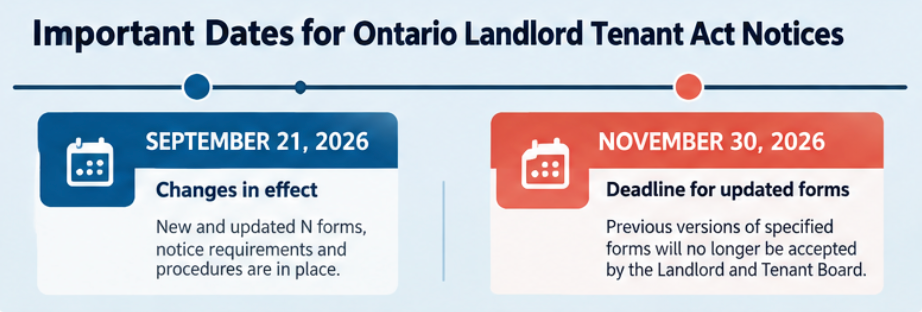
Ontario landlords need to pay attention to recent changes to landlord and tenant notices. Effective September 21, 2026, the Landlord and Tenant Board (LTB) introduced updates to several forms, notice requirements, and tenancy procedures. A second important date is November 30, 2026, when previous versions of specified forms will no longer be accepted.
For rental property owners, these changes are more than an administrative update. Using an outdated form, misunderstanding a notice period, or overlooking a new legal requirement can create unnecessary delays and complications when managing a rental property.
Understanding the latest Ontario Landlord Tenant Act notices is essential for owners who want to protect their investments, manage tenant relationships professionally, and maintain compliance with provincial requirements.
What Changed on September 21, 2026?
The changes introduced on September 21, 2026, resulted from amendments to Ontario’s Residential Tenancies Act, 2006, including legislation under Bill 60 and Bill 97. The Landlord and Tenant Board updated forms, procedures, and guidance to reflect these changes.
Several updates affect how landlords issue notices, apply to end tenancies, and manage situations involving unpaid rent, personal use of a rental unit, and major renovations.
The key changes include:
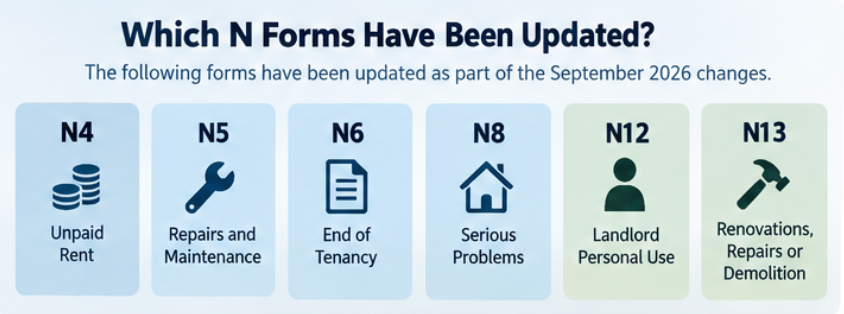
Updated N4, N5, N6, N8, N12, and N13 notices and related application forms.
A shorter notice period for certain rent arrears notices.
Revised requirements for some landlord personal-use notices.
Additional communication requirements when tenants intend to return after qualifying renovations.
These changes mean that Ontario rental property owners should review their existing paperwork and procedures rather than assume that previously used forms and processes remain appropriate.
November 30, 2026: The Deadline Landlords Cannot Ignore
One of the most important dates for landlords is November 30, 2026. According to Tribunals Ontario, previous versions of the specified updated forms will no longer be accepted after this deadline.
The affected forms include N5, N6, N8, N12, N13, and several related applications, including L1, L2, L9, L10, and T5. The N4 form has also been updated as part of the changes.
Landlords should download the current forms directly from the official Landlord and Tenant Board website instead of relying on saved documents, old email attachments, or templates that may no longer be valid.
What should property owners do now?
Review the N forms and applications currently used to manage your rental properties.
Replace outdated copies with the latest official versions.
Update internal checklists and property management procedures.
Confirm the applicable notice period and service requirements before issuing a notice.
Keep accurate records of notices, dates, communications, and supporting documents.
Taking these steps before the deadline can help reduce avoidable administrative errors.
N4 Notices: What Landlords Need to Know About Unpaid Rent
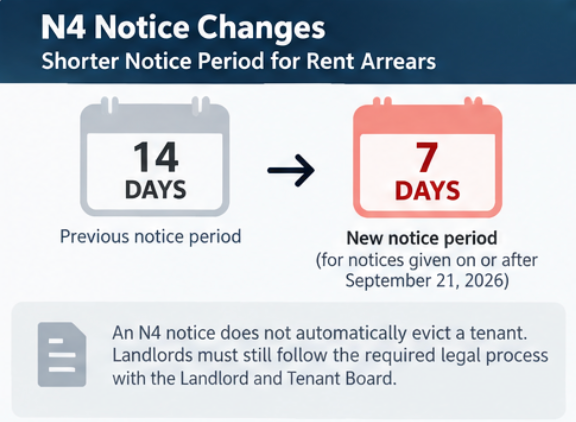
The N4 is used when a tenant has not paid rent lawfully owing under the tenancy agreement. One significant change effective September 21, 2026, is the reduction of the notice period from 14 days to seven days for notices given on or after that date.
This shorter period changes the timeline landlords must understand when dealing with rent arrears. However, an N4 notice does not automatically evict a tenant. Landlords must still follow the required legal process, including filing the appropriate application with the LTB if the matter proceeds.
Property owners should also ensure that the notice contains accurate information and that it is served according to the applicable requirements.
Although a shorter notice period may allow landlords to begin the next stage of the process sooner, proper documentation and compliance remain essential.
N12 Notices: Changes to Landlord Personal Use
An N12 notice is used in specific circumstances when a landlord, a qualifying family member, or a purchaser requires a rental unit for residential occupation.
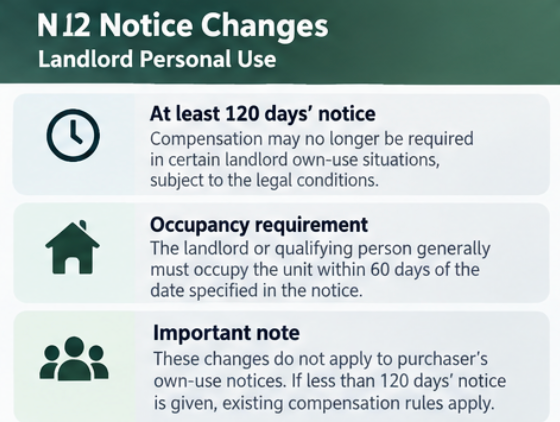
Under the changes effective September 21, 2026, a landlord issuing an N12 for their own use may no longer be required to pay compensation to the tenant or offer another acceptable unit if at least 120 days’ notice is provided, subject to the applicable legal conditions.
This change does not apply to N12 notices issued for a purchaser’s own use. Where less than 120 days’ notice is given, the existing compensation rules continue to apply.
The changes also introduce a requirement that the landlord or another qualifying person generally occupy the unit within 60 days of the date specified in the notice. If this does not happen, a presumption of bad faith may arise in a tenant’s T5 application, although the landlord can attempt to rebut that presumption at a hearing.
Because personal-use notices involve specific legal requirements, landlords should confirm that their circumstances qualify before proceeding.
N13 Notices: Renovations, Repairs, and a Tenant's Right to Return
An N13 notice may be used in qualifying situations involving demolition, conversion, or repairs and renovations that require a tenant to vacate.
The updated rules introduce additional responsibilities when a tenant gives written notice that they intend to return to the rental unit after qualifying renovations or repairs.
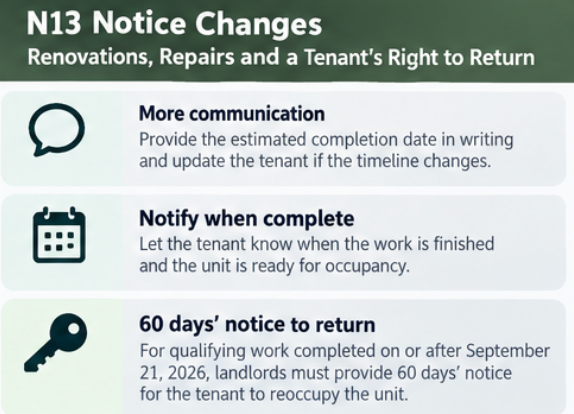
Landlords must communicate the estimated completion date in writing without delay, provide updates if that estimate changes, and notify the tenant when the work is complete and the unit is ready for occupancy.
For qualifying work completed on or after September 21, 2026, landlords must also provide 60 days’ notice for the tenant to reoccupy the unit. The tenant’s right to return is subject to the applicable legal requirements, including the rent rules that apply when the tenancy resumes.
For owners planning substantial work on an occupied rental property, these requirements make careful scheduling, written communication, and recordkeeping particularly important.
How Landlords Can Avoid Costly Compliance Mistakes
Understanding Ontario Landlord Tenant Act notices is only one part of managing a rental property successfully. Owners must also ensure that their processes are consistent, their records are organized, and their decisions comply with the Residential Tenancies Act.
Common mistakes include using an outdated form, calculating a notice period incorrectly, overlooking compensation requirements, or failing to document communications with a tenant.
Before issuing a notice, landlords should verify the current official form, confirm that the notice applies to their situation, calculate the applicable dates, and follow the proper service and filing procedures.
Landlords should also remember that issuing a notice does not necessarily end a tenancy. If a tenant does not leave, the landlord generally needs to follow the appropriate LTB process rather than attempt to remove the tenant independently.
When a situation is complicated or the financial consequences are significant, obtaining advice from a qualified legal professional can help clarify the applicable requirements.
Protect Your Rental Investment With Professional Property Management
Keeping up with Ontario Landlord Tenant Act notices can be challenging, particularly for owners managing multiple units, coordinating repairs, collecting rent, and handling tenant concerns.
Professional property management can help owners maintain organized records, establish consistent procedures, monitor regulatory changes, and manage tenant communications. It can also reduce the administrative burden associated with day-to-day rental operations.
At Richmond Property Management, we help rental property owners navigate the practical responsibilities of owning and managing investment properties. From tenant communication to maintenance coordination and ongoing property oversight, our goal is to help owners manage their properties more efficiently.
If you own rental property in Windsor or the surrounding communities, now is a good opportunity to review your current processes and ensure that your management approach reflects the latest requirements.
Contact Richmond Property Management to learn how professional property management can help you protect your investment, simplify rental operations, and stay informed about important landlord compliance requirements.
Disclaimer: This article provides general information for Ontario rental property owners and is not legal advice. Requirements may depend on the circumstances of a tenancy. Consult the official Landlord and Tenant Board resources or a qualified legal professional for guidance on a specific situation.
Additional Resources:
- LTB: Operational Update
Legislative Changes at the Landlord and Tenant Board, Effective: September 21, 2026 Rental rules in Ontario change today. Here’s what tenants and landlords need to know