Richmond Property Management: How Legal Compliance Protects Owners
Owning a rental property can be a strong wealth-building strategy, but the fastest way to lose time, money, and peace of mind is to treat Ontario tenancy rules like “nice-to-haves.” Legal compliance is not paperwork for paperwork’s sake, it’s a protection system. When your lease, notices, rent changes, maintenance records, and communication timelines are handled correctly, you reduce disputes, avoid dismissed applications, and strengthen your position if an issue ever reaches the Landlord and Tenant Board.
Richmond Property Management helps owners stay compliant by building compliance into daily operations, leasing, maintenance, communication, documentation, and enforcement, so you’re not trying to fix mistakes after the fact.
Richmond Property Management: How Legal Compliance Protects Owners by Reducing Costly Mistakes
Most “landlord problems” don’t start as big problems. They start as small process gaps: the wrong form, a missed notice period, an incomplete lease package, or undocumented maintenance. In Ontario, those gaps can lead to delays, dismissed applications, or tenant disputes that drag on far longer than they should.
Compliance reduces risk in three ways:
Prevention: Clear leases, documented policies, and consistent procedures stop many issues before they start.
Proof: Strong records (inspection notes, photos, work orders, emails) help show you acted reasonably and legally.
Positioning: If enforcement becomes necessary, valid paperwork and timelines protect your ability to act.
Ontario’s Landlord and Tenant Board publishes prescribed forms and filing guidance, and using the right form for the right situation matters.
Legal Compliance Protects Owners with Proper Leasing and Standard Documentation
A compliant tenancy begins with a compliant lease. In Ontario, most private residential tenancies require use of the Standard Form of Lease, and tenants can request a proper copy if they don’t receive it.
Where owners get exposed is not the lease alone, it’s the full “move-in file,” including:
Correct lease form and completed schedules
Clear utility and responsibility terms (who does what, what’s included, what isn’t)
Condition documentation (photos + inspection notes)
Written policies that match Ontario rules (entry, repairs, communication channels)
A property management company that systematizes these steps protects you from vague agreements, misunderstandings, and future “he said / she said” disputes.
Rent Rules and Notice Precision
Rent increases are one of the most common compliance traps. Ontario sets a rent increase guideline for most tenants, and increases must follow specific notice rules and prescribed forms.
Even when an increase is allowed, problems happen when:
notice timing is off
forms are incorrect or incomplete
the increase isn’t calculated properly
documentation isn’t kept in the tenant file
A compliance-first process helps owners protect revenue without accidentally triggering an avoidable dispute or delay.
Legal Compliance Protects Owners through Entry, Maintenance, and Documentation
Owners often assume that “I own the property” means unlimited access. In Ontario, entry and maintenance expectations are tied to tenant rights and legal notice standards under the Residential Tenancies Act framework.
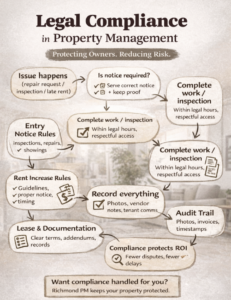
Compliance-driven management protects you by ensuring:
Entry is properly noticed and documented (reason, timing, communication trail)
Maintenance is tracked like a system (request received → triage → vendor assigned → completion notes)
Preventative inspections are scheduled and recorded (reducing emergencies and major repair costs)
Repair histories are stored (helpful for disputes, insurance, budgeting, and long-term asset planning)
When a tenant claims a repair wasn’t handled, the difference between a clean resolution and a drawn-out dispute is often one thing: proof.
Legal Compliance Protects Owners when Enforcement Becomes Necessary
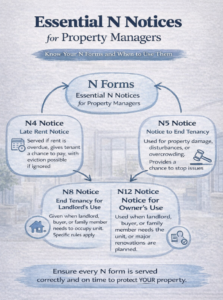
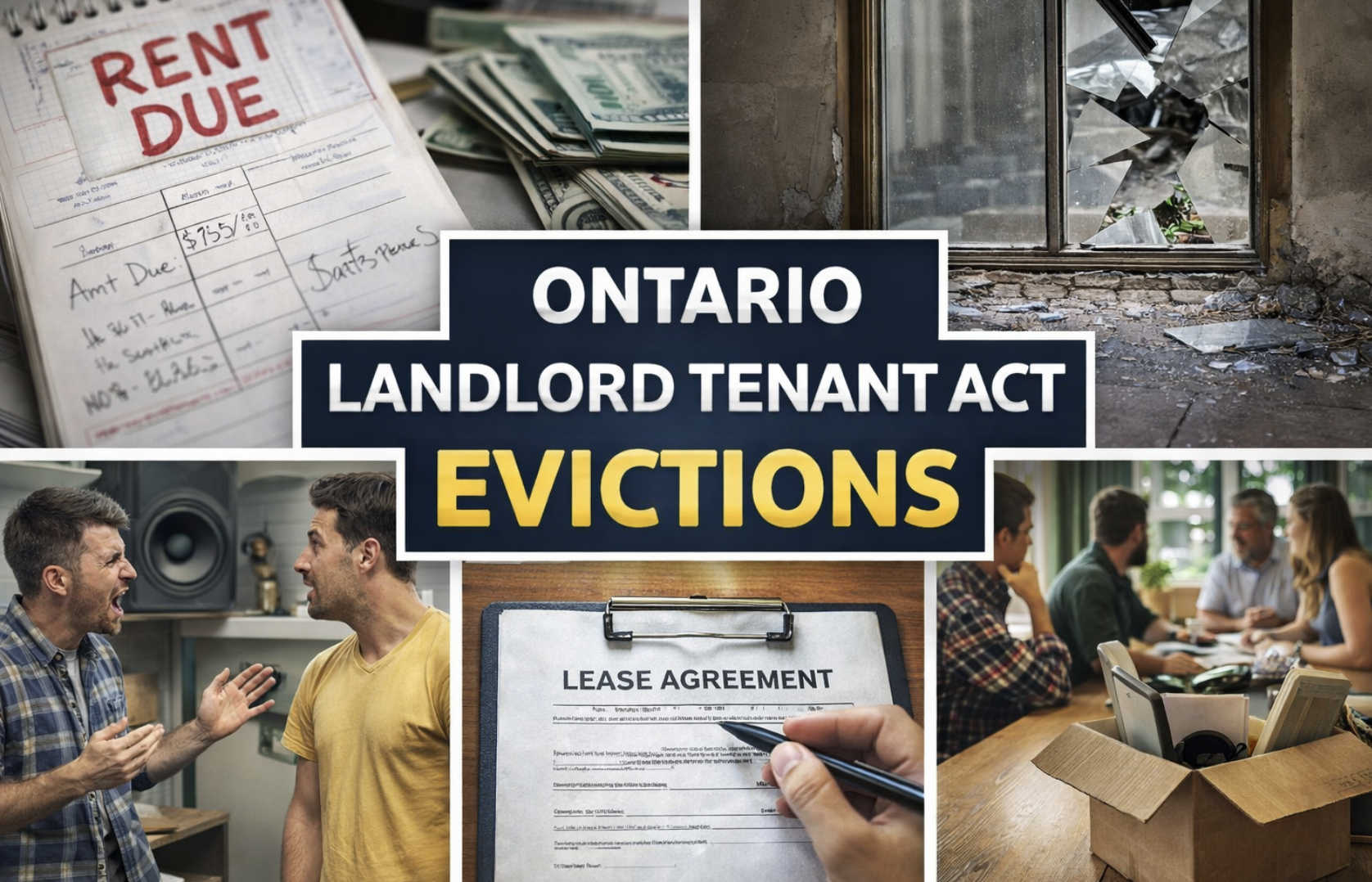
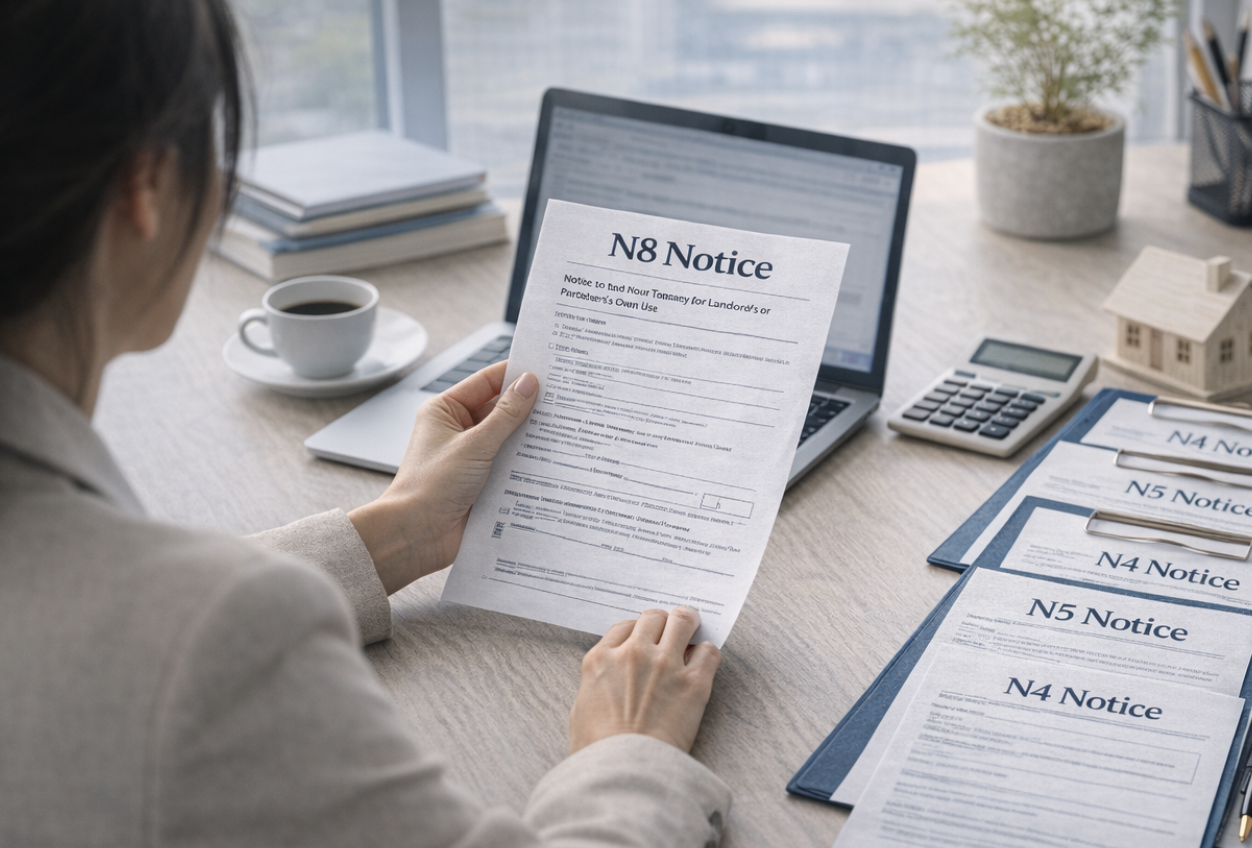
When issues escalate—non-payment, interference, damage, or serious breaches—owners need the right sequence of action, not an emotional response. Ontario uses specific notice forms (for example, N-series notices) and LTB application pathways (for example, L-series applications) depending on the situation.
This is where many DIY landlords get stuck: they issue the wrong notice, miss a requirement, or submit an application that gets delayed or dismissed. A compliant property management process focuses on:
correct notice selection and completion
correct timelines
clear supporting evidence
organized submission readiness
The goal isn’t conflict, it’s protecting your ability to act legally when you need to.
Legal compliance works best when it’s a repeatable operating system, not a once-a-year checklist. Richmond Property Management’s value to owners is that compliance isn’t separate from service, it’s embedded in:
leasing workflows
tenant communication standards
maintenance coordination
documentation and reporting
issue escalation procedures
That means fewer surprises, fewer disputes, and more stable performance from your rental asset.
If you want rental income without compliance stress, Richmond Property Management helps you run your property like a professional operation, proper leasing, documented maintenance, and legally correct processes that protect your time and your investment.
If you’re managing a rental in Windsor-Essex and want a compliance-first approach that reduces risk and saves time, connect with Richmond Property Management through the website and request an owner consultation.