Essential N Forms in Ontario Every Landlord Should Know
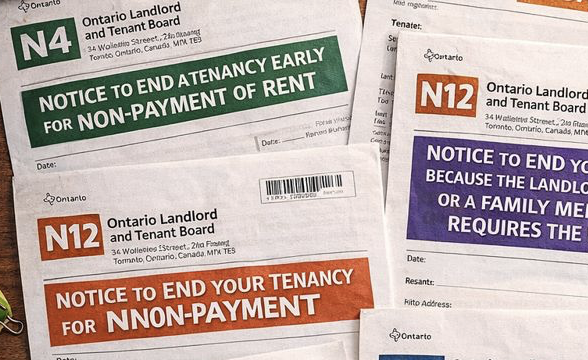
Serving the right notice is one of the fastest ways to protect your rental income, and one of the easiest places for DIY landlords to lose time. In Ontario, “N Forms” are Landlord and Tenant Board notices used for specific situations like non-payment, substantial interference, landlord’s own use, or major renovations. They’re not interchangeable, and they’re not “templates you can tweak.” If the form is wrong, the dates are wrong, or the details don’t match the legal reason, you can end up restarting the process, costing you weeks of rent, momentum, and peace of mind.
This guide breaks down the most common N Forms, what each one is for, and a simple workflow to keep owners protected.
Why the right notice can make or break your timeline
Most landlord headaches don’t come from “not having a reason.” They come from process issues:
Using the wrong notice for the situation
Entering incorrect dates or incomplete details
Missing required information (rent totals, unit address, reason description)
Serving the notice incorrectly or without proof of service
Taking the next step too early, or waiting too long and losing momentum
When your notice is clean and compliant, it supports a clear path forward. When it isn’t, it creates delays that quietly drain ROI.
The Most Common N Forms Landlords Use
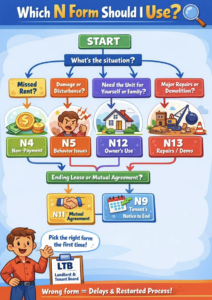
Below are the notices owners run into most often. Not every notice ends a tenancy automatically, many are the required first step before you can apply for the next stage.
N4: When rent isn’t paid on time
Use it when: Rent isn’t paid in full by the due date.
Owner note: The rent ledger matters. Your totals and dates must match what’s actually owed, and your record-keeping should be consistent (payment dates, partial payments, NSF issues). If you’re running multiple units, consistency is everything.
N5: When tenant behavior or damage becomes an issue
Use it when: There’s substantial interference, damage, or conduct that affects the building, the landlord, or other tenants.
Owner note: Documentation is your best friend. Written incident summaries, photos, communication logs, and dates. If the situation escalates, strong documentation can be the difference between clarity and confusion.
N12: When the unit is needed for personal or purchaser use
Use it when: The landlord, purchaser, or eligible family/caregiver requires the unit for residential use.
Owner note: This is a high-scrutiny notice. The reason must match the legal criteria, and the timelines and tenant entitlements must be handled correctly. If this notice is part of a sale plan, align your real estate timeline with your tenancy timeline early.
N13: When major repairs, demolition, or conversion require vacancy
Use it when: Major work requires the unit to be vacant, or the property is being demolished/converted.
Owner note: Renovation planning isn’t just contractors and budgets, it’s also notice planning. If you’re aiming to reposition a property (upgrade, convert, re-tenant at a higher standard), you’ll want to structure the process so your schedule doesn’t get derailed.
N8 and N11: When ending the tenancy is based on term or agreement
N8: Used in specific qualifying circumstances tied to ending a tenancy at the end of term (not a “catch-all”).
N11: A mutual agreement to end the tenancy.
Owner note: N11 should never feel pressured. If you’re unsure what’s appropriate, don’t guess, get guidance so the agreement is clean and defensible.
N9: The tenant’s notice to end the tenancy
Used by: Tenants ending their tenancy under proper notice rules.
Owner note: Owners should understand N9 so you can quickly spot when a notice is valid, when the dates don’t align, and what your next operational steps should be (marketing, showings, inspections, turnover planning).
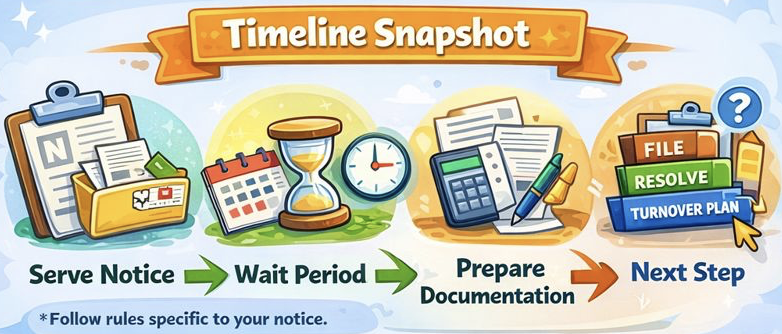
A simple “serve-to-next-step” workflow for owners
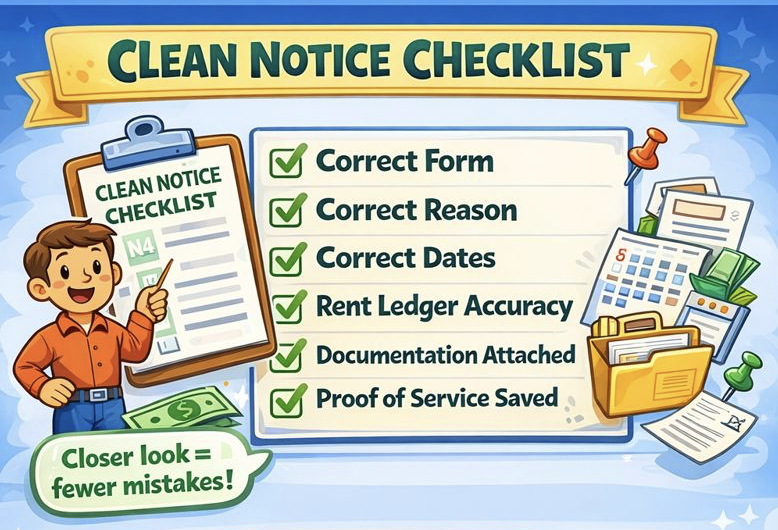
If you want fewer mistakes and fewer delays, run notices like a checklist-driven system:
Identify the true issue (arrears, behavior, owner use, major work, agreement)
Select the correct form for that exact issue
Complete it with precision (amounts, dates, unit info, reason details)
Serve it correctly and keep proof of service
Track the timeline so you don’t move too early, or let it go stale
Document everything (ledger, messages, photos, inspections, incident notes)
This approach keeps emotions out of it and reduces the risk of a process failure.
How a property manager helps you avoid notice mistakes
For many Windsor owners, the real cost of one wrong notice isn’t the form—it’s the ripple effect:
Extended arrears or prolonged vacancy
Delayed turnover and slower leasing
Renovation schedules pushed back
More admin time, more stress, more conflict
Richmond Property Management helps owners reduce risk by running tenancy actions as a repeatable system: consistent documentation standards, proper notice workflows, compliant communication, and clear next-step planning. Owners get fewer surprises, better visibility, and a more professional process from start to finish—without having to personally manage timelines, paperwork, and tenant friction.
If you want your rental managed with compliance built in, so you protect income, reduce stress, and keep your property performing. Richmond Property Management is the hassle-free way to own rental real estate. Visit richmondpm.ca or reach out to the team to discuss your property goals.
Quick answers landlords ask about N forms
Do notices automatically end a tenancy?
Not always. Many notices are a required first step before an application or hearing stage, depending on the situation.
Can I use one notice for multiple issues at once?
Usually, no. Each notice is tied to specific legal reasons. Mixing issues often leads to errors.
What’s the biggest mistake owners make?
Wrong form, wrong dates, incomplete details, or poor service/proof of service.
Should I try to handle notices myself?
You can, but the risk is time and money. If a mistake forces a restart, you lose weeks of progress. Many owners choose property management specifically to avoid that risk.