Ontario Landlord Tenant Act Evictions: Five Real Scenarios and What to Do First
Evictions in Ontario aren’t usually delayed because a landlord doesn’t have a valid reason. They’re delayed because the first steps weren’t documented properly, the wrong form was used, or communication got messy. If you own a rental property, understanding how Ontario landlord tenant act evictions actually play out in real life helps you move faster, stay compliant, and protect your cash flow.
Below are five common scenarios owners run into, plus the most practical “do this first” move in each one. This is general information, not legal advice.
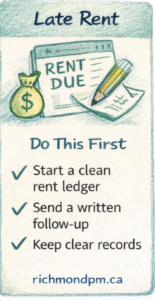
Scenario One: Non Payment of Rent That Starts as One Late Month
This is the most common beginning: rent is late, the tenant promises a date, and you want to be flexible. Then the date passes, a partial payment comes in, and suddenly you’re managing a larger arrears issue.
Send a written follow up confirming the amount owing and the deadline.
Keep everything in writing so the timeline is clear.
Avoid this
Don’t accept partial payments without documenting what they apply to.
Don’t rely on verbal agreements.
Scenario Two: Chronic Late Rent Even If They Eventually Pay
This situation feels “not serious enough,” but it’s one of the biggest stressors for owners. The rent comes in, just always late, messing up mortgage planning and increasing risk over time.
Do this first
Track every late payment in a simple log.
Send one professional message confirming rent is due on the lease date.
If you agree to flexibility, put the agreement in writing and keep it consistent.
Avoid this
Don’t change the due date month to month—it blurs expectations and weakens your position if things escalate.
Scenario Three: Damage to the Unit The Tenant Downplays
Owners find damage during inspections or after a neighbor reports issues. Tenants may call it normal wear, blame a guest, or promise they’ll fix it.
Do this first
Take dated photos and write inspection notes right away.
Get quotes if repairs are beyond basic wear and tear.
Confirm the issue and expected solution in writing.
Avoid this
Don’t start repairs before documenting the original condition.
Don’t get pulled into emotional blame arguments—stay factual.
Scenario Four: Noise Complaints and Neighbor Conflict
Noise or disruption complaints can seem like “drama,” but repeated issues can become serious quickly. If you ever need to prove a pattern, you’ll need a clean record.
Do this first
Ask for written complaint details (date, time, what happened, how often).
Send a professional written warning referencing lease obligations.
Keep a simple timeline of incidents and your responses.
Avoid this
Don’t act on one vague complaint with no documentation.
Don’t send angry messages, your communication may become part of a file.
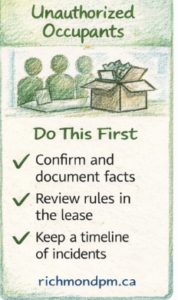
Scenario Five: Unauthorized Occupants or Airbnb Style Use
This shows up as extra people living there, a hidden sublet, or short-term rental behavior. Many owners react by confronting the tenant in person, which often escalates things.
Do this first
Confirm the facts with evidence and dates.
Review your lease clauses related to occupants and subletting.
Put concerns in writing and request clarification by a deadline.
Avoid this
Don’t threaten lockouts or “self enforce” anything.
Don’t rely only on hearsay.
What These Scenarios Have in Common
Across all five situations, the owners who protect themselves do three things consistently:
Document early
Communicate professionally in writing
Follow a repeatable process instead of reacting emotionally
That’s the real difference between a manageable file and months of preventable delays, especially when Ontario landlord tenant act evictions become necessary.
How Richmond PM Helps Owners Handle These Problems Properly
Richmond Property Management helps owners in Windsor and Essex County handle these situations with structure: consistent tenant communication, organized documentation, inspection reporting, and clear owner updates. If you want your rental to run like a system, not a stress loop, Richmond PM can help.