Understanding the Ontario Tenant Act: A Practical Guide for Rental Property Owners
Owners often say “Ontario tenant act” when they mean the rules for residential rentals. In Ontario, those rules sit in the Residential Tenancies Act and are enforced through the Landlord and Tenant Board (LTB). Because the system is process-driven, “easy ownership” comes down to using the right steps, the right forms, and clear documentation.
What the Ontario Tenant Act Covers
The Act shapes the moments that protect your income: how you enter a unit, how you manage repairs, how you increase rent, and what process applies when there is a serious problem. If a notice is invalid or a process is skipped, an LTB application can be dismissed and you may have to start over.
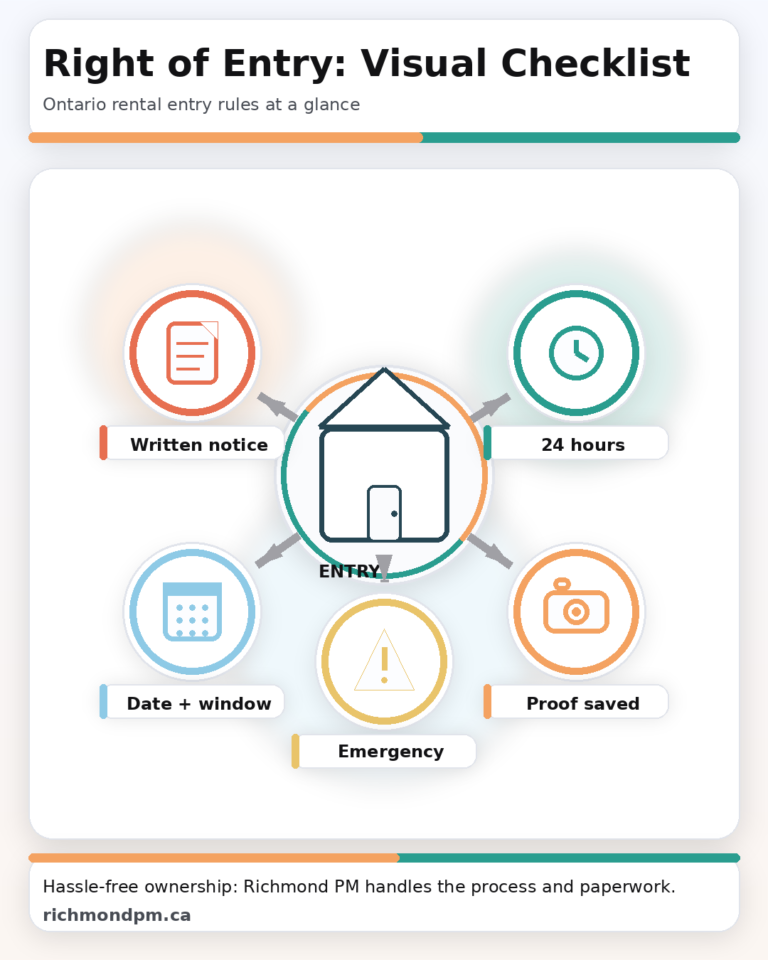
Right of Entry Rules: How to Access Your Rental the Correct Way
Entry is a common compliance trap. In many non-emergency situations, a landlord must provide written notice at least 24 hours in advance, and entry is generally limited to standard hours. A good notice states the reason, the day, and a realistic time window.
Maintenance and Repairs: Setting a Process That Prevents Disputes
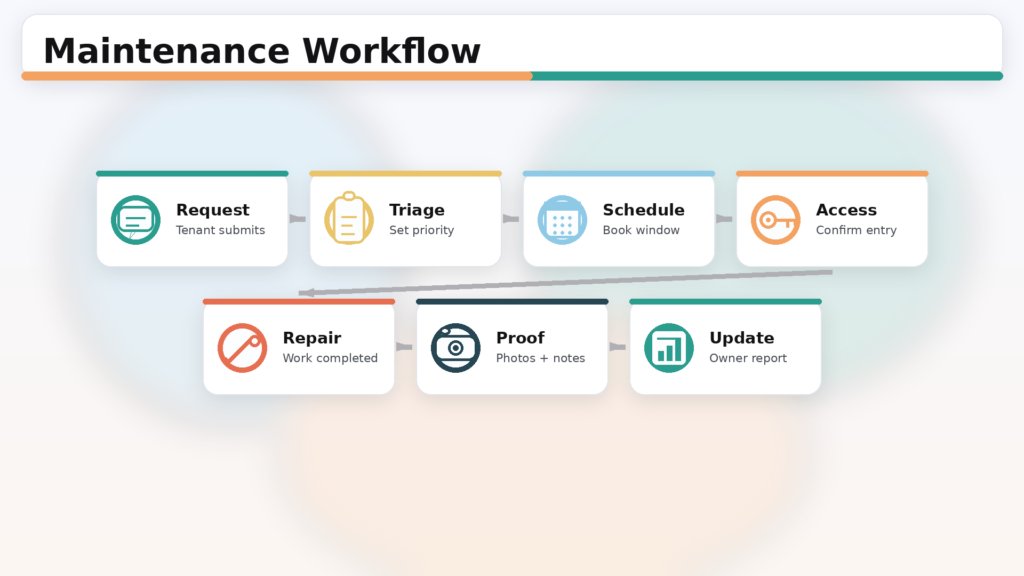
Most maintenance disputes are really communication and recordkeeping problems. Use a repeatable workflow:
• Get the request in writing (portal or email)
• Book a service window and confirm it in writing
• Store photos, invoices, and completion notes in the property file
When timelines, access, or work quality are questioned, your records matter.
Rent Increases and Notices: The Steps Owners Must Follow
Ontario guidance and the prescribed LTB notice explain that tenants must receive written notice at least 90 days before an increase takes effect. Timing rules also apply, so treat rent changes as a compliance workflow, not a conversation
Common Compliance Mistakes That Cost Owners Time and Money
Most setbacks are predictable:
• Informal entry texts instead of proper written notice
• Repairs scheduled without a clear access window or proof of completion
• Rent increases handled without the prescribed notice
• Notices served with incorrect dates or weak proof of service
Richmond Property Management turns those risk points into systems owners do not have to run themselves.
• Entry and inspection workflows with compliant notice practices
• Maintenance coordination with tenant updates and completion proof
• Organized property files for leases, ledgers, notices, and repairs
• Consistent tenant communication that reduces escalation
Owners get fewer disputes, faster resolutions, and reporting without living in their inbox. It is the simplest way to stay compliant.
Add internal links here: Property Management Services, Maintenance Coordination, Tenant Screening.
When to Hire a Property Manager Instead of Self-Managing
If you are losing evenings to maintenance calls, second-guessing forms, or reacting without a documented process, you are already paying a cost in time and stress. A property manager replaces reactive decisions with repeatable workflows and consistent follow-through.

Owner FAQ: Clear Answers About the Ontario Tenant Act
Q: Do I usually need notice to enter for repairs?
A: In many situations, yes. Written notice at least 24 hours in advance is required, and entry must follow the Act’s limits.
Q: How much notice is required for a rent increase?
A: Ontario guidance and the N1 notice explain the 90-day written notice requirement.
Q: Where do I find official landlord forms?
A: Use the LTB forms library to access current notices and instructions.
Work With Richmond Property Management
If you’re a hands-on owner, you already know the hard part isn’t “finding a tenant.” It’s everything that comes after: coordinating repairs, documenting communication, staying compliant with entry rules and notices, and keeping the property performing month after month.
Richmond Property Management is built to take that day-to-day workload off your plate without you losing visibility. We handle tenant communication, maintenance coordination, and the paperwork trail that protects you, then keep you in the loop with clear updates and reporting.
If you want to see what that looks like for your property, reach out to Richmond PM for a management consultation. We’ll review your rental, talk through your goals, and outline a management plan that makes ownership easier and more predictable.